Category: Ako | Learn

Mapping the Migratory Flight of the Kuaka

LI: To use Google My Maps to show the migratory flight path of the Kuaka.
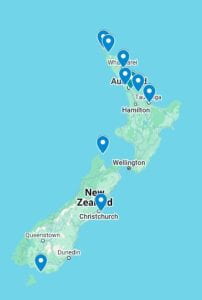
For this activity we needed to create a map that shows how long the kuaka birds fly for and where the kuaka birds migrate to.  

Kuaka birds, also known as bar-tailed godwits, love to hang out near the water, especially in places like estuaries, mudflats, beaches, and coastal marshes, where they find lots of yummy food.

Every year, as winter approaches, the Kuaka fly north to the breeding grounds of Alaska, stopping off in Korea and Japan for a rest and some food on the way. On the return journey, as our summer approaches, they fly directly to New Zealand, a trip of endurance with no food, water, or rest; nearly 12,000 km non-stop.

Did you know that the Kuaka bird holds the world record for the longest flight?
Dot to Dot Connections: The Kuaka

LI: To draw the lines between the words to show how the connections you have made.

For this activity, we created a DLO showing our Dot to Dot Connections about the Kuaka Bird. We used the scribble tool to connect each word and write down information that is related to the text. For example : Migration and Habitat (The Kuaka birds migrate from Alaska to NZ to have a safe environment). We used our prior knowledge to figure out some information about the Kuaka Bird. Something we enjoyed while doing this activity was collaborating and communicating to each other to grab different ideas and learn from one another.

Facts/Questions  about the Kuaka Bird:

  • Did you know the Kuaka, or bar-tailed godwit, is famous for its incredible long-distance migration
  • Did you know they travel 11,000 kilometers non-stop from Alaska to New Zealand, a journey that takes about 8-9 days?

The Kuaka Infographic

LI: To create an infographic that tells others about the migration of the kuaka

During reading, Group 2 had created an Infographic about the Kuaka bird. Did you know the scientific name for the Kuaka bird is Limosa lapponica. In our infographic DLO, we included their habitat, diet and appearance for others to learn and know more about it. Something we found interesting while reading information was that Kuaka Birds scientific name is Limosa Lapponica because we thought Kuaka Birds was their only name. From this DLO I can see we collaborated and worked as a group to grab ideas from each other.

Photo Story

LI: To understand the concept of visual storytelling.

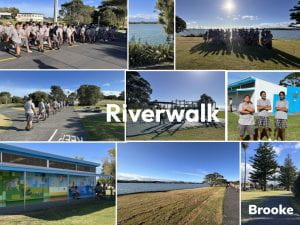
For this activity, we went on a walk down to the Tamak Awa in Point England to learn about Samuel Marsden. We created a collage with around 9 to 10 pictures of the river and the activity we did, the pictures I have included was when we were walking to the river and back to the school, pictures of the park and a group photo. Something I enjoyed when walking was when we get to see what the Tamaki Awa looks like now then when Samuel Marsden saw before.

Camp Movie

LI: To create a collage of images or short movie that reflects my time at camp.

For Inquiry, we were challenged to create a collage of images or a movie that shows our time at camp. I created a short movie off Canva that shows what activities we have done while being at the Kokako Lodge for camp. My favourite part about camp was doing the orienteering because it’s fun finding clues to find the answer and explore.

What did Samuel Marsden see?

LI: To use the information in the diary extract to create an image of what we think Samuel Marsden saw when he sailed down the Tamaki awa.

For Inquiry, we used Adobe Express to create a image that we think Samuel Marsden saw in the 1800s. We included the Tamaki river because Samuel Marsden traveled from England and landed on the Tamaki River We learnt how to create an AI image when using prompts about a story.

Preventing Kauri Dieback

LI: To understand how we can help prevent Kauri Dieback disease and why we need to do this.

For this activity, we created a DLO about preventing Kauri Dieback. At camp we were challenged to walk across the Cossey-Massey track at Hunua. Before entering the bush we made sure our shoes were disinfected by washing our shoes and scraping off the bits on the bottom. This DLO tells what to do when entering the Kauri Dieback area. I think this is an important DLO and message because it can help us to prevent Kauri Dieback from spreading and it’s a special Taonga for Aotearoa.

A Moment in Time

LI: To write a poem that describes a moment in time

For Inquiry, I created a moment in time poem to describe how it felt to climb up and walk along the high beam. We used some vivid description of what I heard, I see, I felt and I wondered, an example is I heard my team supporting, I saw how high it was while climbing up the ladder with a terrifying feelings, I felt the vibration shaking in my hand once I held the rope thigh while walking along the high beam and I wondered if the rope would snap while doing a cartwheel. Melle and I have described what it was like to walk along the high beam. We chose this challenge because it was one of the most terrifying and interesting activities to do a poem about.

Exploring AI

LI: To identify and understand how descriptive language is used to create a clear picture of a setting in a text.

For this activity, we used Adobe Express to help us create a image of the description in the text. To create this image we used prompts I got from the text to make it look like an alleyway in real life. This was very hard to do because it didn’t do what I asked it to specifically do. We included details to make the alleyway a bit scary and terrifying. We learnt that we have to use powerful words to make the AI generate what we want.

Who was Samuel Marsden?

LI: To use our smart searching skills to find out who Samuel Marsden was and what he is known for.

For this activity, we used our smart searching skills to research facts about Samuel Marsden and who he is. A sentence we found out was that Samuel Marsden was the first known Christian lesson on land in New Zealand was preached by Marsden at Oihi Bay in the 1814s. For the facts we used two different websites, the website I used were Wikipedia and Padlet. Something interesting I found out about Samuel Marsden was he was an English minister of the Church of England. I learnt its is important to use my own words because we won’t know what it means.